
Laser Surface Hardening
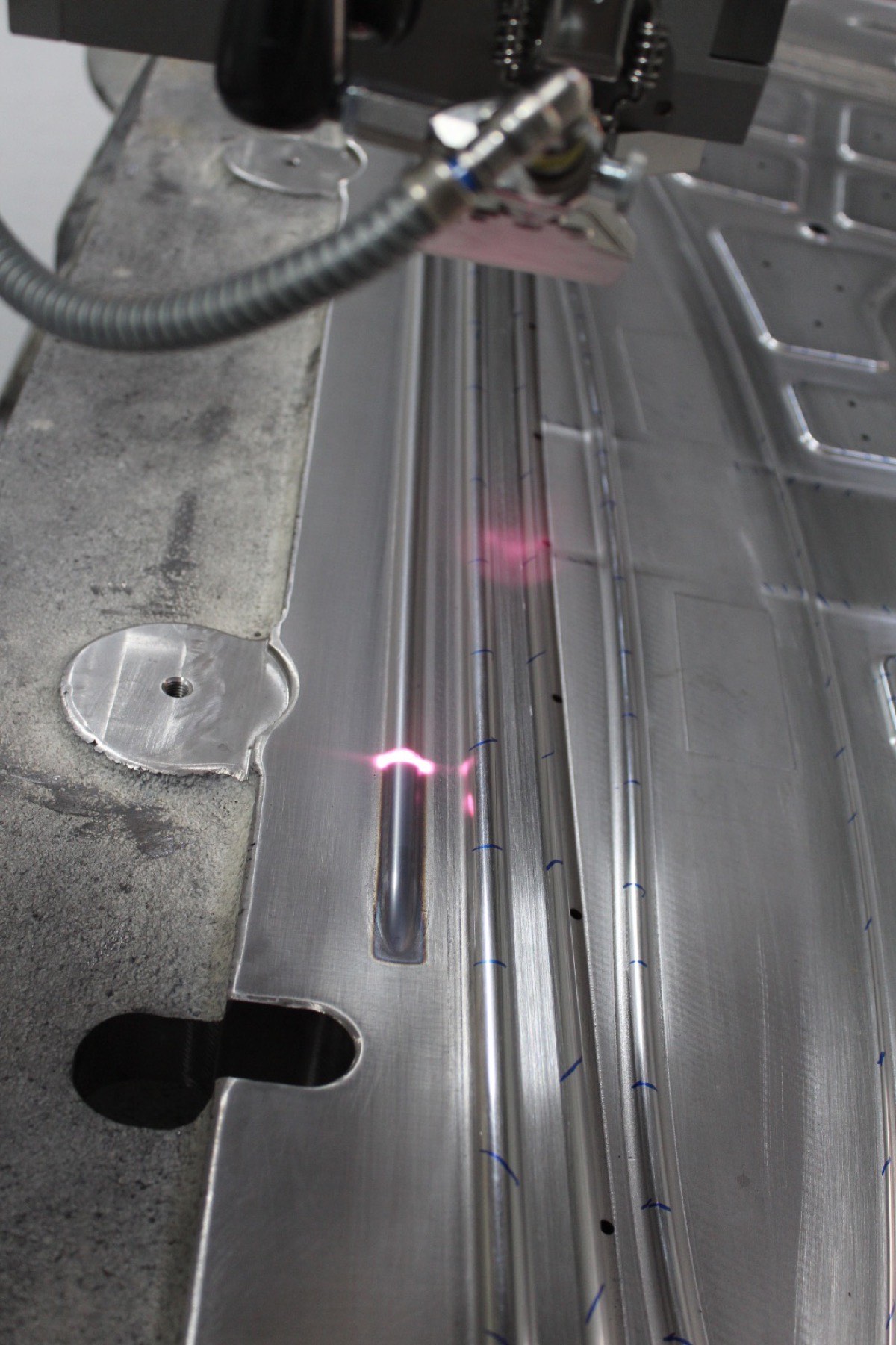
Hardening the surface through controlled heat input, without adding any material. The form and dimensions of the part are preserved and the heat-affected zone stays narrow.
No added material,
only heat
Nothing is added to the surface. The laser raises a thin surface layer to transformation temperature; once the beam passes, heat flows rapidly into the cold mass of the part and the surface self-quenches. No external water or oil quench is needed.
Because the heated layer is very thin, the bulk of the part stays cold. The process takes place only on the targeted surface; the dimensions and form of the part do not change.
Laser hardening is ideal for parts demanding high precision. The base material does not distort during the process; only the surface hardens, to a depth of 1–1.5 mm. Part life and durability increase as a result.
What laser hardening delivers
High surface hardness
Rapid heating and self-quenching form a martensitic structure — a layer markedly harder than the base material.
Minimum distortion
The heated layer is so thin that the bulk of the part stays cold. No dimensional change or distortion occurs.
Long-lasting durability
Resistance of the wearing surface increases; replacement frequency and the associated downtime fall.
No added material
Nothing is deposited. Form and dimensions are preserved and no post-machining is needed.
Selective treatment
Only the programmed track hardens. The remaining areas are untouched and keep their properties.
No quenching required
Heat flows into the part's own cold mass; no external quench medium and therefore no additional process step.
What happens in laser hardening
| Characteristic | In laser hardening |
|---|---|
| Scope | Selective — only the programmed track hardens; the rest of the part is untouched |
| Added material | None — the form and dimensions of the part are preserved |
| Cooling | Heat flows into the cold mass of the part; no water or oil quench needed |
| Case depth | 1–1.5 mm below the surface |
| Spot sizes | 15 × 15 mm, 20 × 5 mm, 60 × 5 mm |
| Subsequent machining | Not required — the part can be used directly after treatment |
Laser hardening is for applications that need high surface hardness. If hardness is required deep into the part, this service is not suitable — we say so up front during the assessment.
Laser hardening — frequently asked
Do the dimensions of the part change during laser hardening?
No. No material is added and the heated layer is so thin that the bulk of the part stays cold. No dimensional change or distortion occurs.
What case depth is achieved?
Hardening reaches 1-1.5 mm below the surface. If hardness is required deep into the part, laser hardening is not the right method — we say so up front.
Is quenching with water or oil required?
No. Once the beam passes, the heat flows rapidly into the cold mass of the part and the surface self-quenches. No external cooling means no additional process step.
Can it be applied to parts with complex geometry?
Yes. The 7-axis robot keeps the laser head at the correct angle on non-flat surfaces. Only the programmed track hardens; the rest of the part is untouched.
Can it be applied to a die that has been reworked?
Yes. Because dimensions are preserved, it can be applied directly after rework to form and cutting zones and draw radii on sheet-metal dies.
Which area of your part must harden?
A photograph with the worn track marked is enough. Let us establish together whether hardening or cladding is required.